Sanctum
"Honestly, I was surprised how fast it happened. The case studies got me excited, but I tried to stay realistic. And then we just started seeing the numbers move"


When someone asks ChatGPT "How do I choose the right CRM for my startup?", the brands mentioned in that answer get qualified leads while others remain invisible. According to Gartner research, traditional search engine volume will drop 25% by 2026, with search marketing losing market share to AI chatbots and other virtual agents.

This isn't about content volume. You might have comprehensive resources and detailed guides. But if AI platforms don't consistently feature your brand when prospects ask purchasing questions, you're invisible during the most critical discovery moments.
According to Forrester research, B2B buyers are adopting AI-powered search at three times the rate of consumers.
This begs the question: if prospects are asking AI platforms direct questions about solutions in your industry, how do you ensure they hear about your brand in those critical answer moments?

When someone asks "What's the best project management tool for remote teams?" or "How do I evaluate email marketing platforms?", they're not browsing - they're seeking direct buying guidance. AI platforms like ChatGPT (conversational AI assistant), Perplexity (AI-powered search engine), and Google AI Overviews (AI-enhanced search results) respond with curated recommendations based on question-specific criteria that most content never addresses.

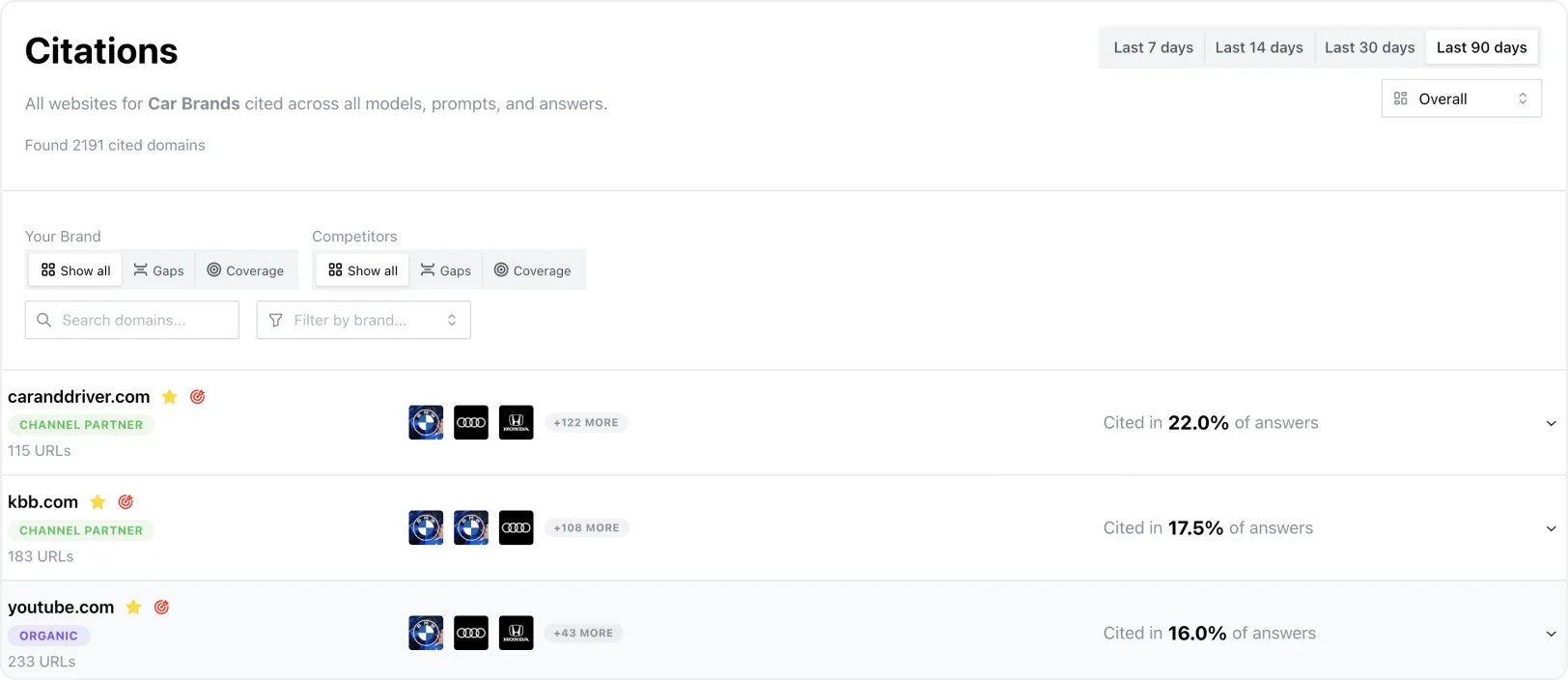
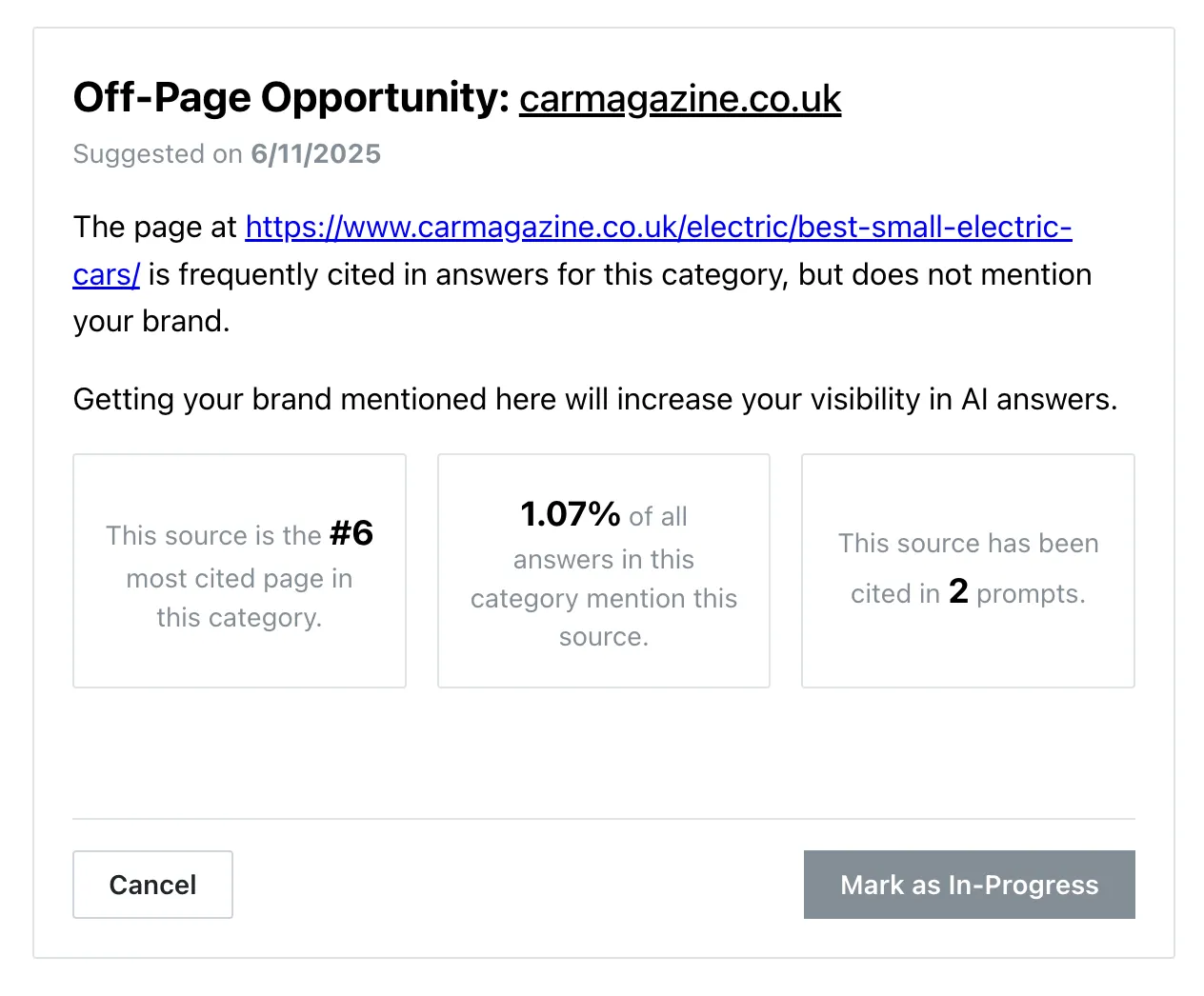
You'll see question gaps where competitors consistently get recommended, high-value questions that generate frequent responses in your industry, and specific opportunities to increase your answer inclusion based on actual question-answer patterns.
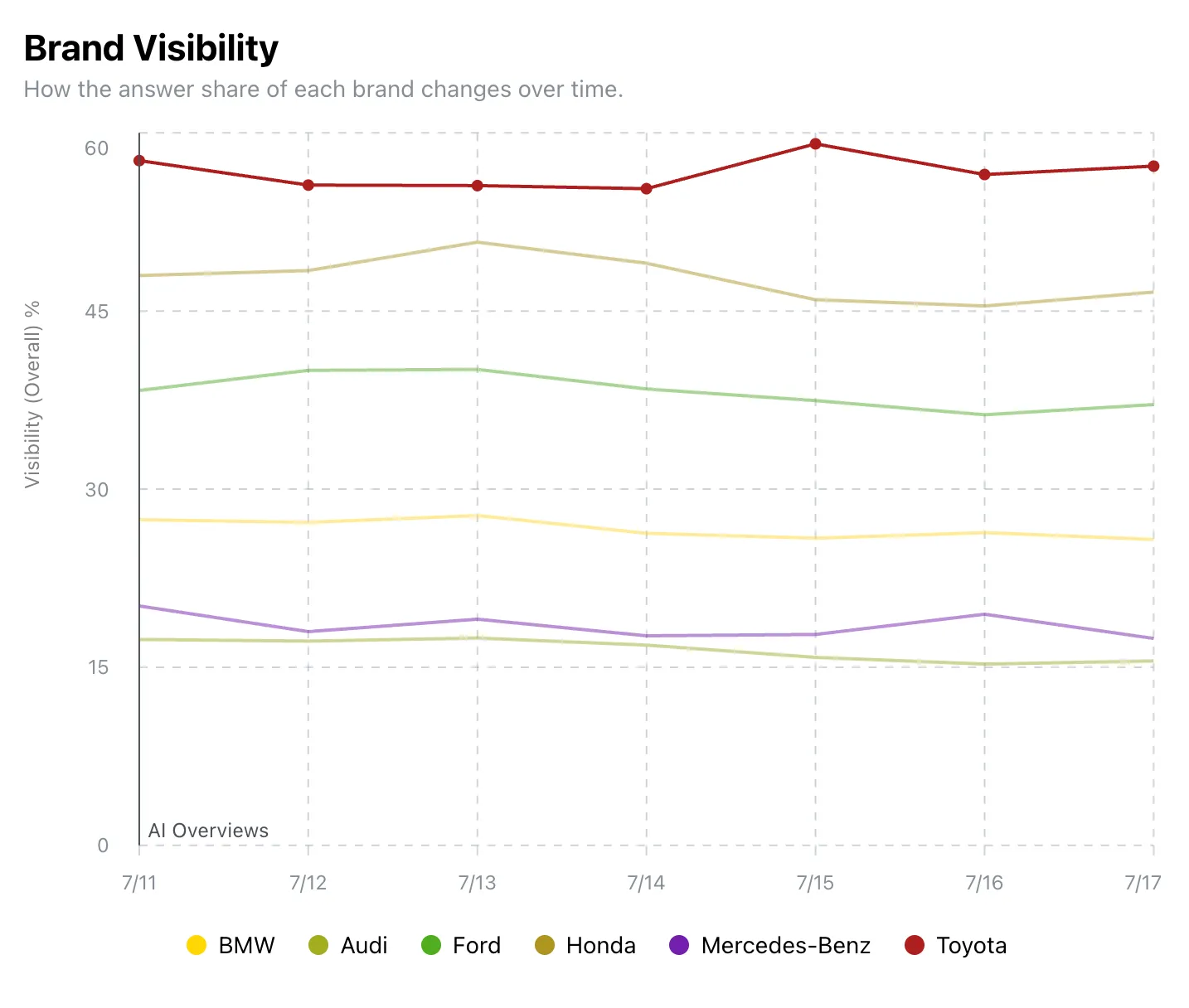
Monitor how question targeting affects your recommendation frequency across AI platforms. When you optimize content for high-value questions or address question gaps, you'll see exactly how it impacts your mention rates. While Gauge tracks the four major AI platforms daily, AEO optimization principles provide broader visibility benefits across the expanding ecosystem of AI-powered search and recommendation systems.
One customer used our question intelligence approach to understand which evaluation questions prospects ask most in their industry and optimized their content to address those specific questions. They went from appearing in 22% of relevant AI answers to 42% in just four days.
Another team identified the comparison questions where competitors dominated recommendations and tripled their visibility by creating targeted content that directly addressed those question patterns.
According to PwC research, companies implementing AI optimization strategies can achieve 20% to 30% gains in productivity, speed to market, and revenue. You'll stop guessing about prospect questions and start targeting the specific questions that drive recommendations in your industry.




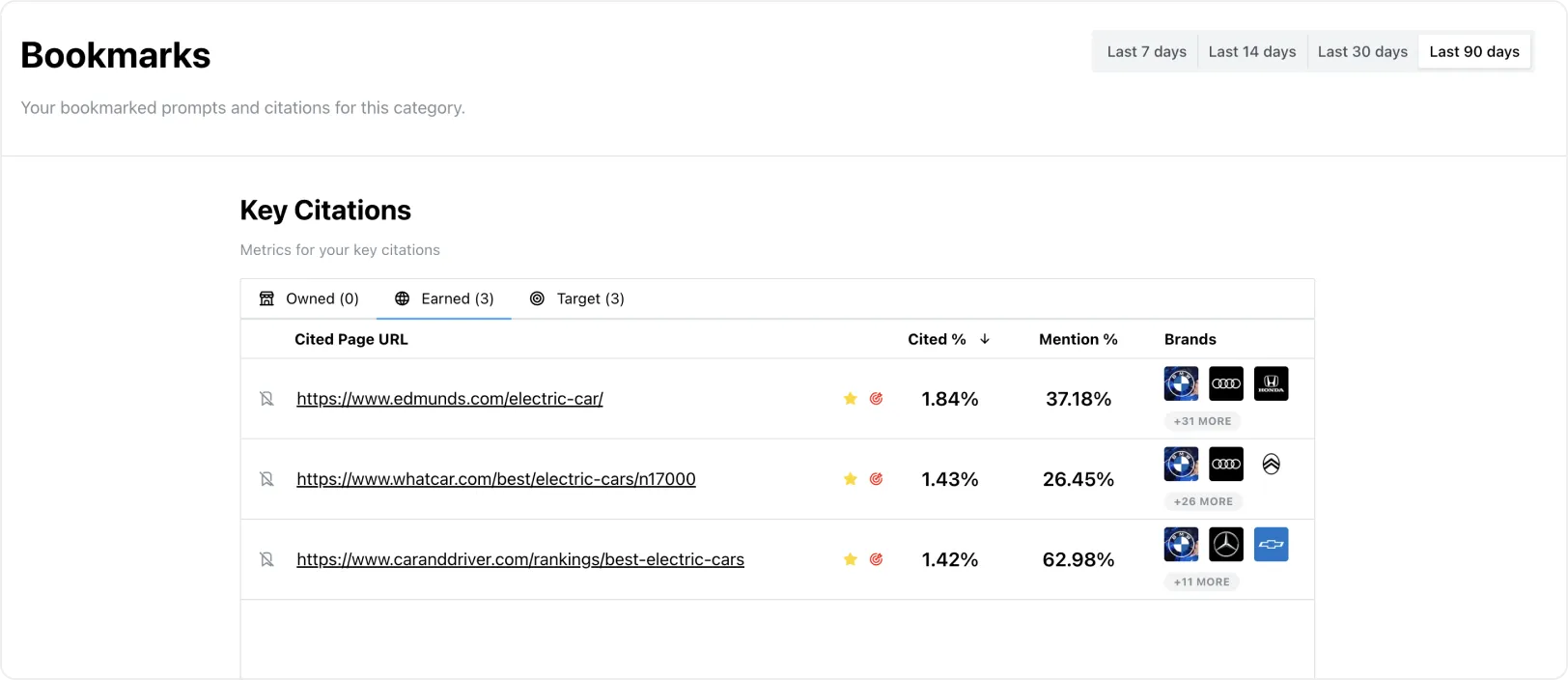
AEO shows you which questions actually generate brand recommendations when AI platforms create answers in your industry. For example, when someone asks ChatGPT "Best accounting software for freelancers," you'll see which brands get recommended, how often your brand appears, and how your answer inclusion compares to competitors across different platforms.

Regular content optimization focuses on broad topics and search rankings. Our question intelligence approach monitors which specific questions generate brand recommendations in AI answers. You'll see real question-answer data rather than assumptions about what prospects might ask, helping you understand why some brands consistently get recommended while similar brands don't.
Focus on the highest-impact questions first:
AI platforms consistently respond to purchase-intent questions including:
Focus on ChatGPT, Gemini, Perplexity, and Google AI Overviews since they have the largest user bases for business questions. Each platform responds differently to the same questions, so comprehensive question intelligence means understanding how each platform handles evaluation and comparison questions. AEO optimization also provides indirect benefits across other AI-powered search and enterprise platforms that use similar content evaluation principles
Teams typically see improvements within days of targeting proven question opportunities. One customer increased recommendation rates from 22% to 42% in four days after optimizing content for the specific questions we identified. Success comes from addressing questions that actually drive qualified prospects rather than creating content without question focus.
Start by understanding exactly which questions favor competitors and why their content gets selected for recommendations. Look at how they structure answers, what information they include, and how they address prospect concerns. Focus on creating superior answers for the same questions rather than avoiding competitive topics.
Each platform has distinct preferences: ChatGPT (conversational AI assistant) favors comprehensive, authoritative content with clear structure and direct answers. Perplexity (AI-powered search engine) prefers content with supporting citations and detailed explanations. Google AI Overviews (AI-enhanced search results) responds well to structured data, FAQ formats, and content that matches traditional SEO signals while addressing specific questions.
Often yes. Many teams see significant improvements by restructuring existing content to better match how prospects ask questions and how AI platforms prefer to answer them. You can optimize current resources to directly address high-value questions, improve answer formatting for AI platforms, and better align existing expertise with question patterns.
Track question-specific metrics including recommendation frequency for targeted questions, answer inclusion rates compared to competitors, performance improvements across different AI platforms, and question coverage compared to industry leaders. Gauge provides these metrics so you can see which question optimization efforts actually improve your AI recommendation rates.
Look for questions where competitors appear consistently but your brand doesn't, focus on evaluation and comparison questions that indicate purchase intent, and analyze which questions generate the most qualified prospects in your industry. Start with 3-5 high-impact opportunities rather than trying to address everything at once.
AI platforms favor content that provides comprehensive answers to specific questions, includes supporting data and examples, demonstrates clear expertise, uses structured formatting that's easy to parse, and focuses on providing value rather than promotional messaging. The key is matching content structure to how prospects naturally ask questions.
Book a demo to see how question analysis works in practice. We'll show you the methodology behind understanding question patterns and explain how successful teams use this intelligence to improve their AI answer visibility. This gives you the foundation to make decisions based on actual question data rather than guesswork.